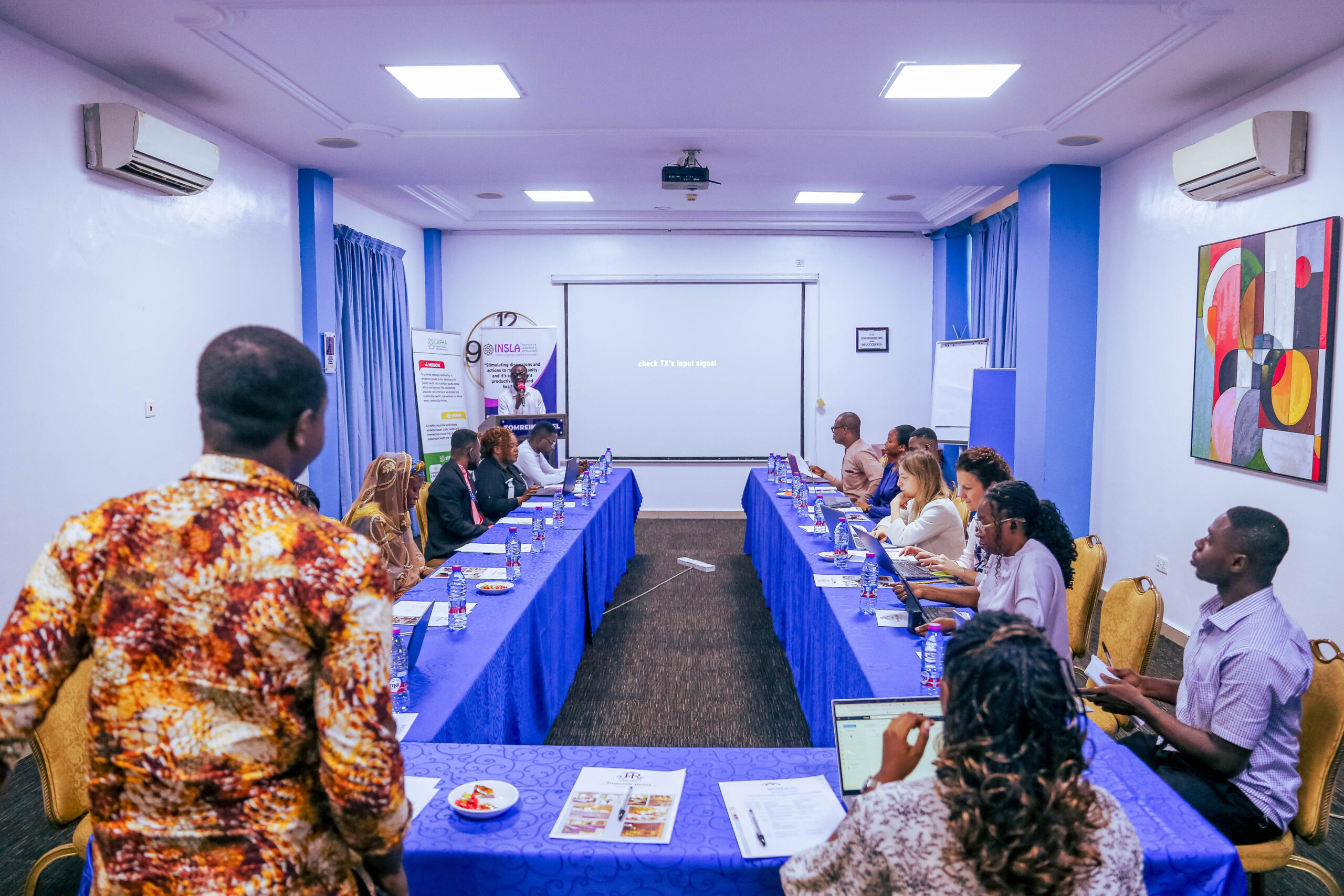
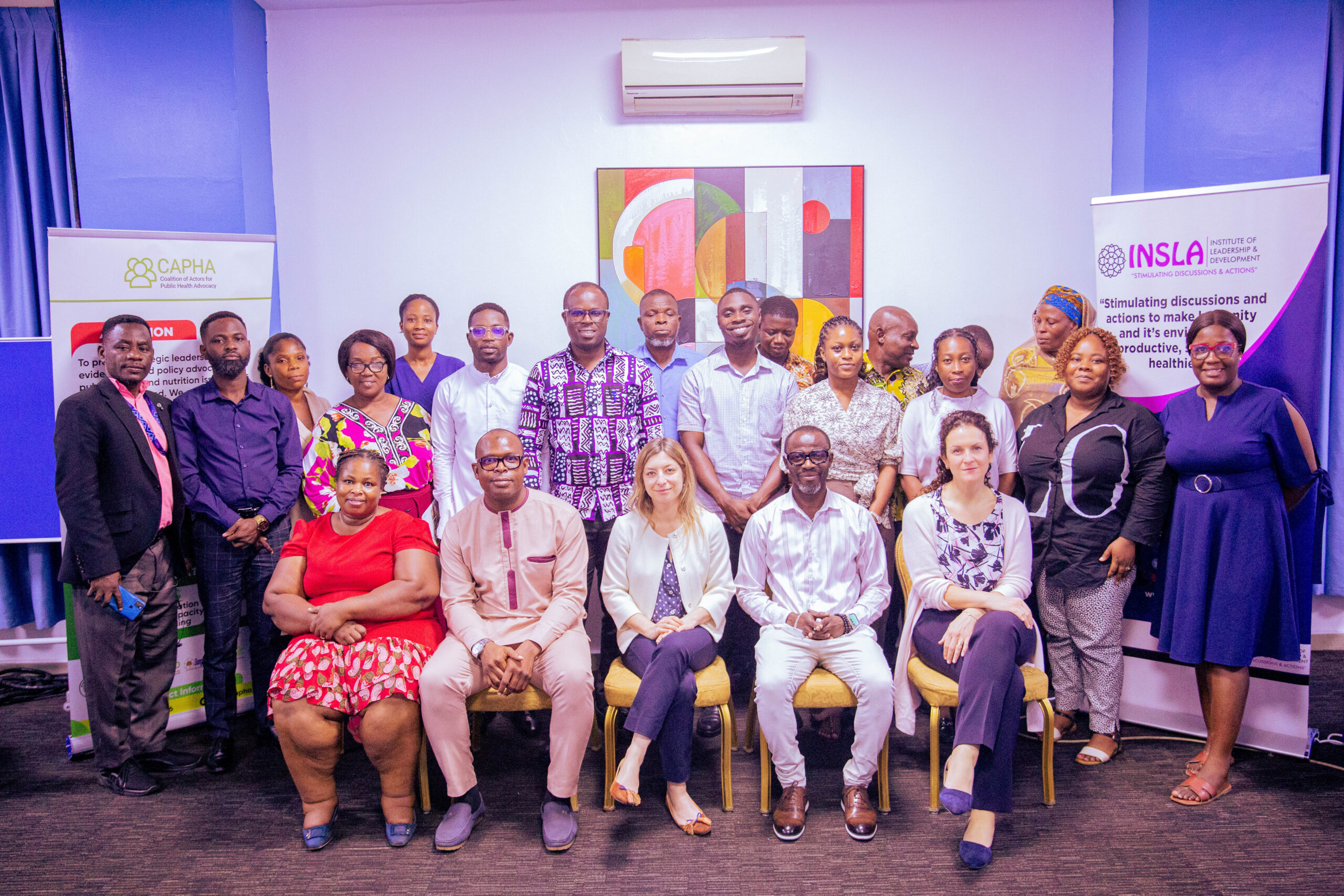
On, the 3rd of February 2026, INSLA coordinated a capacity development-building workshop
for members of the CAPHA Coalition and other civil society organizations (CSOs) aimed at
strengthening advocacy skills and enhancing stakeholders’ understanding of regulatory
approaches for promoting healthier food environments in Ghana. The workshop was facilitated by Mr Benjamin Anabila, the director of INSLA. Ms. Mary Yayra Kpogo, the coordinator for the project welcomed participants to the workshop and briefed participants that the workshop formed part of the mechanisms to strengthen actors with the technical knowledge, communication skills and strategic engagement approaches necessary to support the adoption and implementation of evidence-based food policies to address the growing burden of diet- related NCDs in Ghana. The workshop brought together 22 CSO representatives and two representatives from IDLO. Ms. Giuilia Zevi on behalf of IDLO provided a brief overview of the GLOBAL RECAP Project. Ms. Kpogo took participants through a Pre Workshop evaluation session before presentations began. The pre-workshop evaluation assessed participants’ baseline understanding of healthy food environment policies, regulatory measures, and advocacy approaches prior to the commencement of the sessions. The workshop was in two sessions; session 1 for presentations and session 2 for practical sessions.
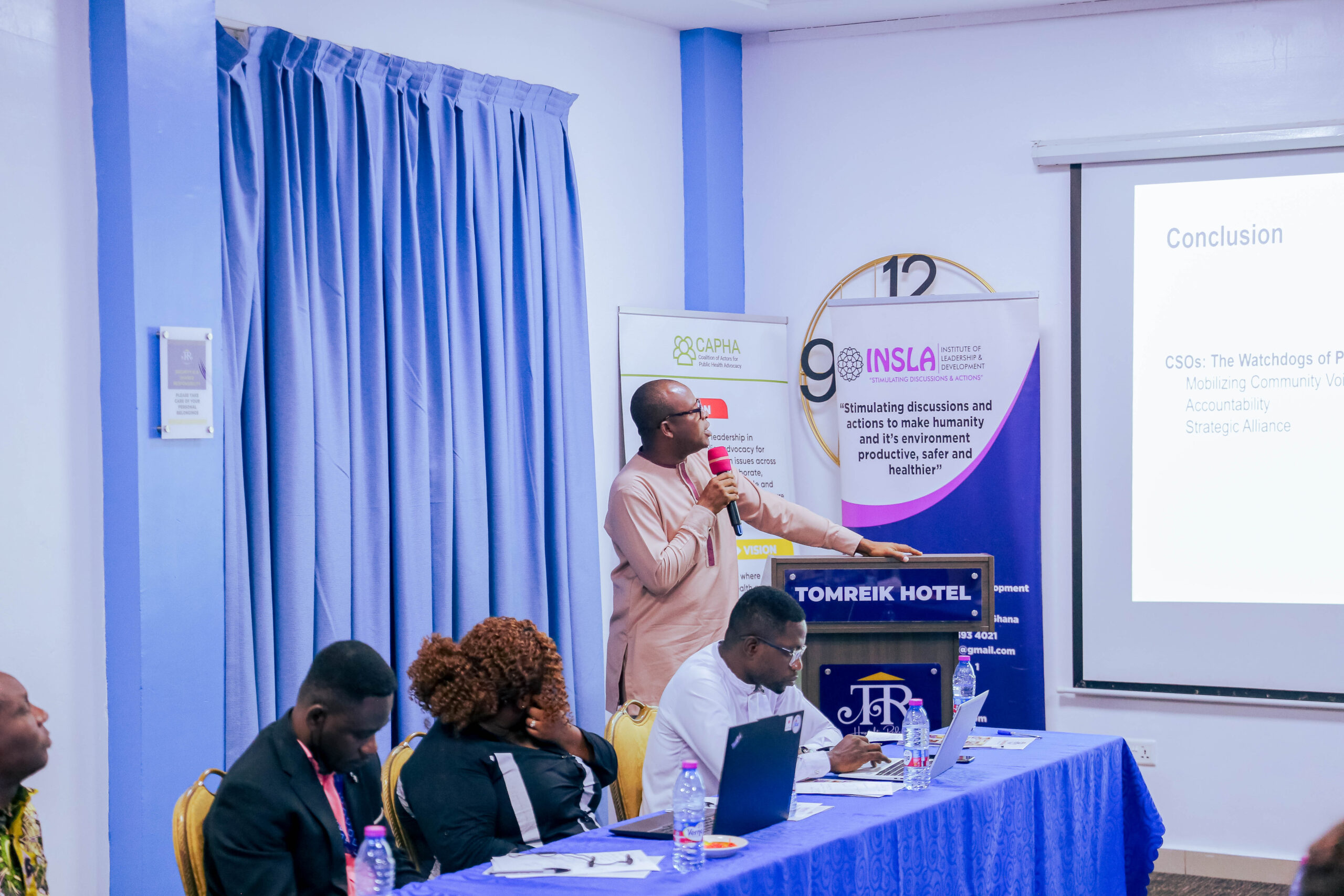
Starting the first session, Dr. Kasim Abdulai, a senior Lecturer at the School of Allied Health, University of Cape Coast, a licensed dietitian and a director at the Coalition of Actors in Public Health Advocacy (CAPHA) delivered a presentation on policy frameworks and policy bundles for healthier food environments. The presentation provided participants with a deeper understanding of the different policy measures being advocated for, including FOPL, Food Marketing Restrictions Policy, and Food-Related Fiscal Policies. Participants were guided through the objectives, policy rationale, expected public health impact, implementation considerations, and the importance of policy coherence and multisectoral collaboration in achieving successful policy adoption and implementation.
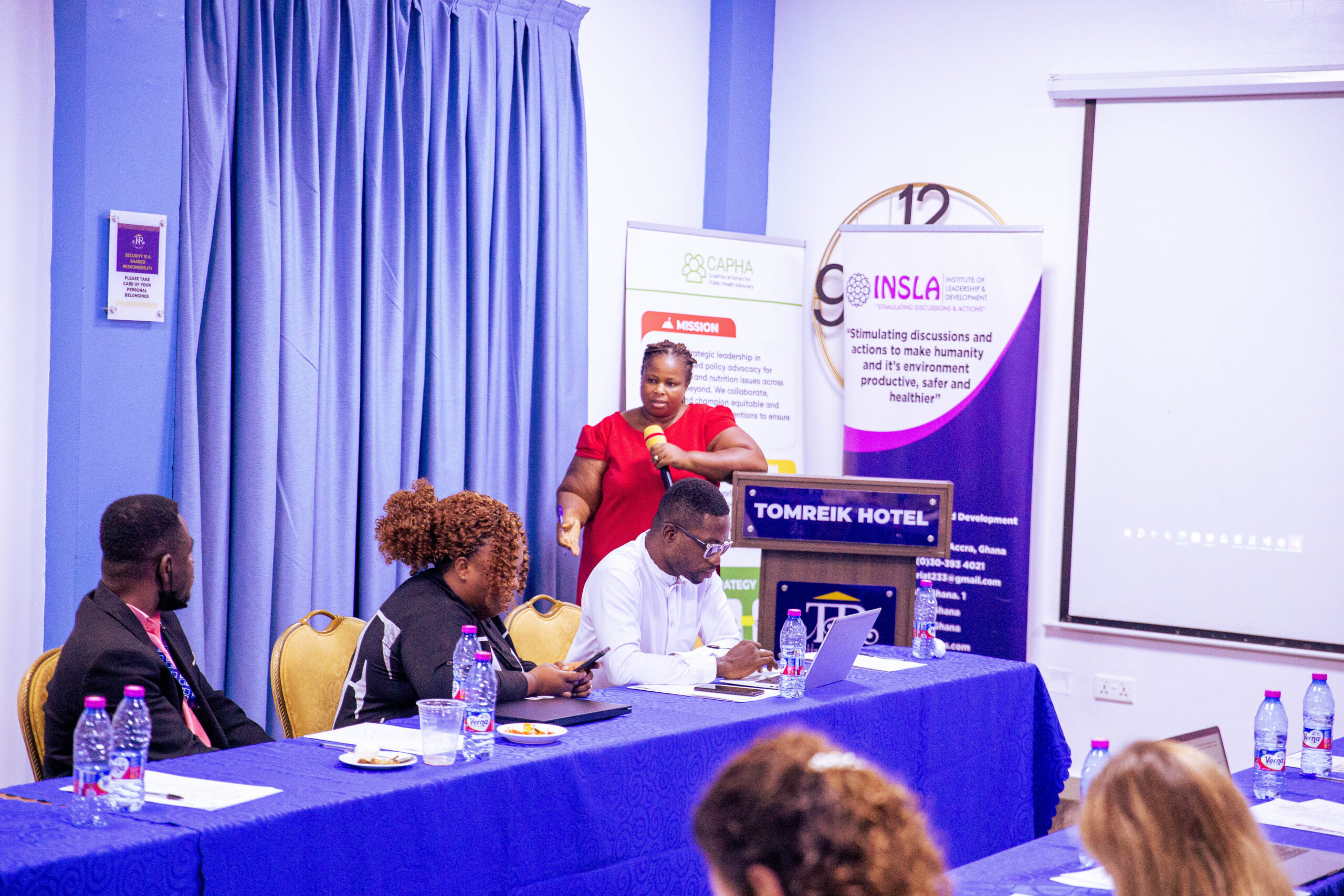
Ms. Gifty Aidoo from the Food and Drugs Authority (FDA) also made a presentation on the
importance of regulatory approaches for creating healthier food environments. Her
presentation highlighted the critical role of government-led regulatory measures in protecting
public health and some of the existing food regulatory measures. She discussed the
relevance of the food environment policies and the proposed implementation framework and
further reiterated the FDA’s mandate in the implementation of these policies.
Mr. Benjamin Anabila from INSLA lead participants through a practical and interactive
session on effective advocacy strategies and networking for healthier food systems. The
session focused on building participants’ capacity practically in stakeholder engagement,
strategic communication, coalition building, policy influencing, and media advocacy.
Participants were also taken through practical approaches for engaging policymakers,
strengthening partnerships, and sustaining advocacy momentum to support healthier food
environment policies in Ghana.
As part of the practical capacity-development building component of the workshop,
participants were divided into two groups to undertake group exercises focused on
developing advocacy messages around selected policy bundles. Each group was a assigned
a specific policy and tasked with defining a clear advocacy goal, identifying suitable
advocacy platforms, determining their main target audiences, and developing at least three
key advocacy messages tailored to each target audience identified.
Another interactive session involved role-play exercises designed to simulate real-life
advocacy and stakeholder engagement scenarios. Participants were again divided into two
groups. One group role-played a meeting with the parliamentary select committee on health,
where participants advocated for the adoption and implementation of the three policy
bundles as critical measures for improving food environments and addressing the rising
burden of NCDs in Ghana. The second group conducted a simulated radio interview session
focused on sensitizing the public and advocating for the adoption and implementation of the
three policy bundles to promote healthier food environments and combat NCDs in Ghana.
Through this exercise, participants strengthened their media engagement and public
communication skills, including how to simplify technical policy concepts, deliver persuasive
messages, and respond to public concerns and misconceptions during media interactions.
To assess the effectiveness of the workshop and measure changes in participants’
knowledge and advocacy capacity, participants completed pre-workshop and post-workshop
evaluations.
A total of 16 participants completed the pre-workshop assessment. Thirteen (13) out of the
16 participants indicated they already had some level of awareness of the food policies and
regulatory measures aimed at promoting healthy food environments in Ghana, while 3
reported no prior awareness. Among the policies mentioned, the most recognized was the
FOPL Policy, followed by food-related fiscal policies particularly the Sugar-Sweetened
Beverage Tax. In terms of understanding of these policies, most respondents rated their
understanding as either “Fair” or “Good,” a few considered their understanding “Very Good,”
while one participant reported a “Poor” understanding of the policies. This indicated that
although awareness existed, there was still a need for further sensitization and capacity
strengthening.
The assessment also explored participants’ confidence in their ability to support, inform, and
advocate for healthy food environment regulatory measures. Seven (7) described
themselves as “Very confident,” and 3 reported being “Not very confident.”
The post-workshop evaluation conducted at the end of the workshop shows a significant
improvement in participants’ knowledge, understanding, and confidence regarding healthy
food environment policies and regulatory measures. A total of 15 participants completed the
post-assessment, and all respondents indicated awareness of healthy food environment
policies. The assessment further revealed a marked improvement in participants’ self-rated
understanding of healthy food environment policies. Fourteen (14) out of 15 respondents
rated their understanding as “Very Good. All participants also reported higher levels of
confidence in their ability to support, educate others on, and advocate for healthy food
environment policies. The percentage of confidence level of participants to support and
advocate for healthy food environment regulatory measures increased from 43.8% to 92.9%.