

The Institute of Leadership and Development (INSLA), the Coalition of Actors in Public Health and Advocacy (CAPHA), Parliament, academia, civil society organisations and development partners have called for urgent reforms to Ghana’s food regulatory framework to address the growing burden of non-communicable diseases (NCDs).
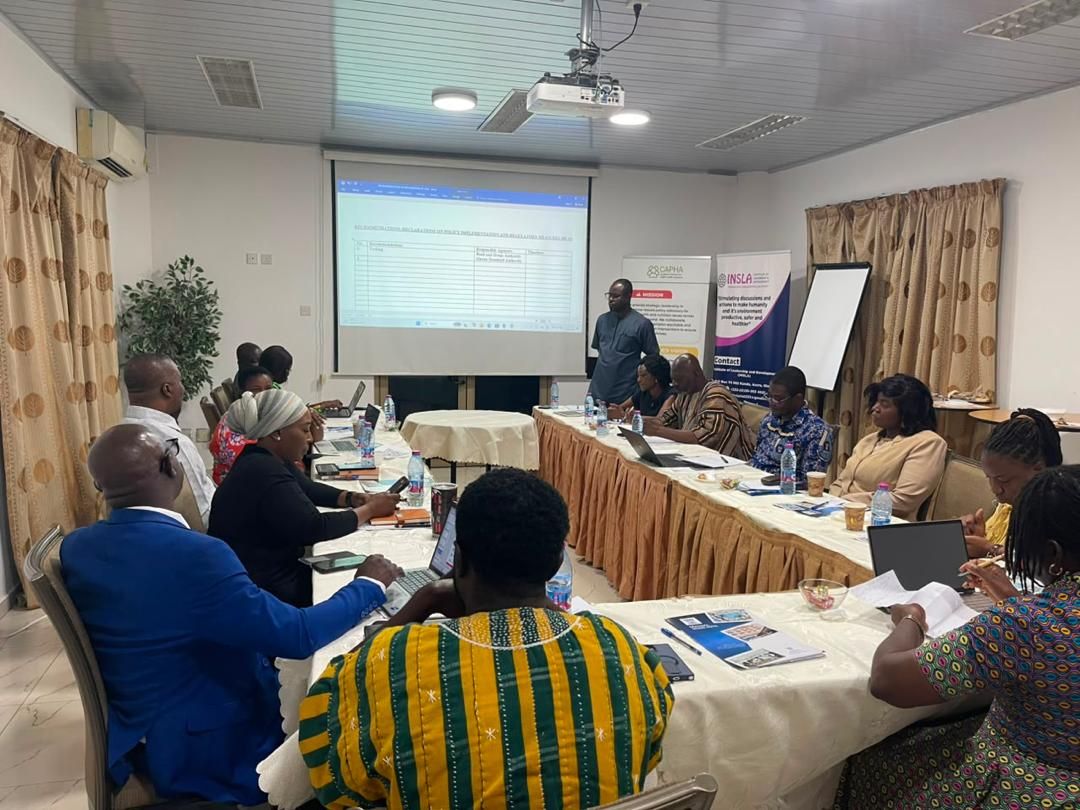
The call was made at a high-level policy roundtable organised by the Institute of Leadership and Development (INSLA) and the Coalition of Actors in Public Health and Advocacy (CAPHA) on August 19, 2026, at the Mensvic Grande Hotel.
The dialogue, held under the theme “Best Practice Food Regulatory Frameworks – A Catalyst for Healthy Food Environments and NCDs Prevention in Ghana,” brought together representatives from the Food and Drugs Authority, Ghana Health Service, Ghana Revenue Authority, Ghana Standards Authority, Ghana Education Service, National Health Insurance Authority, academia, civil society and the media.
The meeting was chaired by Dr Sebastian Sandaare, Vice Chairperson of Parliament’s Select Committee on Health and Member of Parliament for the Daffiama/Bussie/Issa Constituency.
Delivering the opening address, Dr. Sandaare mentioned that Non Communicable Diseases (NCDs) contribute to majority of deaths in the country and these NCDs are caused by unhealthy diets and unhealthy lifestyles.

He affirmed Parliament’s commitment in ensuring that Ghana’s food environment is healthy by stating that the select Committee on Health is ready to provide strong oversight and legislative support for evidence-based policies.
He further stated that once conversations on the policies to protect the public from unhealthy food environment are ongoing, the general public must be urged to complement policy interventions by making healthier food choices, including a return to traditional diets.
INSLA Programmes Officer Mary Yayra Kpogo said NCDs currently account for approximately 43% of all deaths in Ghana, making stronger preventive measures necessary.
She identified hypertension, diabetes, cancers and heart disease as major health challenges and argued that the food environment plays an important role in driving these conditions.
Ms Kpogo called for the implementation of measures including front-of-pack warning labels, food marketing restrictions, food-related fiscal policies and healthier public food procurement standards.
She described these measures as necessary public health interventions rather than optional policy choices.
Professor Amos Laar of the University of Ghana’s Department of Population, Family and Reproductive Health gave a presentation on Non Communicable Diseases (NCDs) and Food Environments in Ghana.
According to Prof Laar, failure to act would result in recurring treatment and medication costs, productivity losses, caregiver burdens, disability and premature deaths.
He also warned that delaying action would allow unhealthy consumption patterns and market practices to become more entrenched, making future reforms more difficult and costly.
Prof Laar said research indicates that Ghana’s food environment is heavily skewed towards unhealthy products, noting that for every one square metre of healthy food availability, there are approximately six square metres of unhealthy food availability.
He therefore urged government to act early, arguing that Ghana is already paying the price of unhealthy food environments through healthcare costs, lost income and other social and economic consequences.
Dr. Alex Moyem Kombat, the Assistant Commissioner and Head of the Research and Policy Unit at the Ghana Revenue Authority (GRA) presented on Food-Related Fiscal Policies: Opportunities and Challenges for Ghana.
In his presentation, he menti
oned that World Health Organization recommends the use of consumption taxes, subsidies and pricing to fight unhealthy environment.
These measures, he said include; consumption taxes like excise taxes, VAT on unhealthy foods, the use of subsidies on foods that contribute to healthy and pricing policies to increase prices of unhealthy products and reduce prices of healthy products for affordability.
Dr Kombat noted that Ghana already applies various taxes, including excise duties, import duties and Value Added Tax, to some food and beverage products.
He said the country’s tax framework also provides for various forms of support for healthy foods.
According to him, the Excise Duty Act, 2014 (Act 878) has been reviewed and passed by Parliament and is awaiting presidential assent.
He also mentioned that, these policies when implemented will lead to reduction in NCDs which account for 43% of all deaths and 31% of disease burden in Ghana annually as well as reduction in Healthcare cost.
He recommended adjusting specific tax rates for inflation, ring-fencing excise tax revenue for NCD prevention and treatment, and introducing taxes for tax unhealthy products based on their content (sugar, alcohol, fats, salt content).